
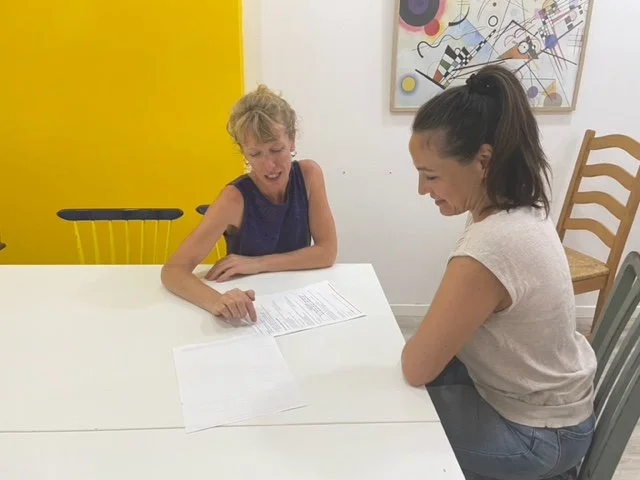
Meet Emma
In 2010, I decided to start my own small business teaching Portuguese to the growing expatriate community in Central Portugal, particularly around the Tomar area. Before that, I had spent many years teaching languages in local language schools and felt it was time to create something that better reflected my own teaching philosophy.
Many people would comment on how well I spoke Portuguese—especially as an Englishwoman—and ask me what my secret was. But I quickly realised that speaking a language well and teaching it effectively are two very different skills. Being bilingual, or even multilingual, does not automatically make someone a good teacher. What fascinated me was not just the language itself, but the process of learning it: why some people succeed, why others struggle, and how to make a new language truly stick.
My own route into language teaching was perhaps a little unusual. I am not a typical linguist by background; my strengths have always been in maths and science. Like many people educated in the UK, I received very little formal instruction in English grammar at school and languages were not given great emphasis. It was only later, while preparing for my Trinity TESOL qualification, that I began studying grammar in depth and started my career teaching English as a second language to adults, and later to children as well.
That experience shaped the way I teach today. I understand what it feels like to learn a language as an adult and to encounter concepts that native speakers often take for granted. More importantly, I understand that learners need more than explanations of grammar rules. They need a clear path, engaging materials, opportunities to communicate, and techniques that help them remember and use what they have learned.
When I began teaching Portuguese, I found that many of the materials available simply did not meet learners' needs. Textbooks often assumed grammatical knowledge that learners did not have, focused heavily on rules rather than communication, and were usually written from the perspective of native speakers rather than language learners. As a result, I started creating my own resources, activities, and learning materials designed specifically for adult learners of Portuguese.
Over the years, I have built a huge bank of resources and teaching materials, drawing not only on my classroom experience but also on specialist training in teaching Portuguese as a Second Language through the University of Coimbra. This combination of practical teaching experience and professional training allows me to provide explanations that are clear, relevant, and tailored to the needs of English-speaking learners.
My teaching is learner-centred and communicative. I believe people learn best when lessons are engaging, interactive, and connected to their real lives and goals. I also use a flipped-classroom approach wherever appropriate, allowing students to study key concepts independently and then use lesson time to practise, communicate, and receive personalised support. This makes learning more efficient and helps students make faster progress.
What makes our courses different is that we focus on developing all aspects of the language together. Vocabulary, pronunciation, speaking, listening, reading, writing, and grammar are introduced in a balanced way, so you do not end up in the frustrating situation of being able to read Portuguese but not understand it when people speak, or knowing grammar rules but struggling to hold a conversation.
We also respect your time. Our courses are carefully structured and divided into manageable levels, allowing you to start at the point that suits you and learn what you genuinely need. Along the way, we help you understand not only Portuguese, but also how language learning works. We compare Portuguese with English and other languages where useful, provide memory hooks and learning strategies, and help you become a more confident and independent learner.
Most importantly, we aim to make the learning process enjoyable. Learning a language should challenge you, but it should not be painful. Through engaging lessons, practical communication, supportive guidance, and access to a welcoming learning community—including classes, chat groups, book clubs, WhatsApp groups, and in-person meetups—you will be supported every step of the way.
My goal has always been simple: to help people feel confident using Portuguese in their everyday lives and to make the journey there as effective, enjoyable, and rewarding as possible.